Thai Land Title Deed: What a Chanote Is and How to Check It Before You Buy
Short answer
A chanote is the title deed the Land Department issues to prove ownership, so the owner can sell, transfer or mortgage the land. Nor Sor 3 papers only certify use. Before paying a deposit, match the deed number, area and owner's name against the local land office copy, and read the back for mortgages or freeze orders.
Summary of this article by the DooAsset team · Updated
What a chanote is, and how it differs from weaker papers
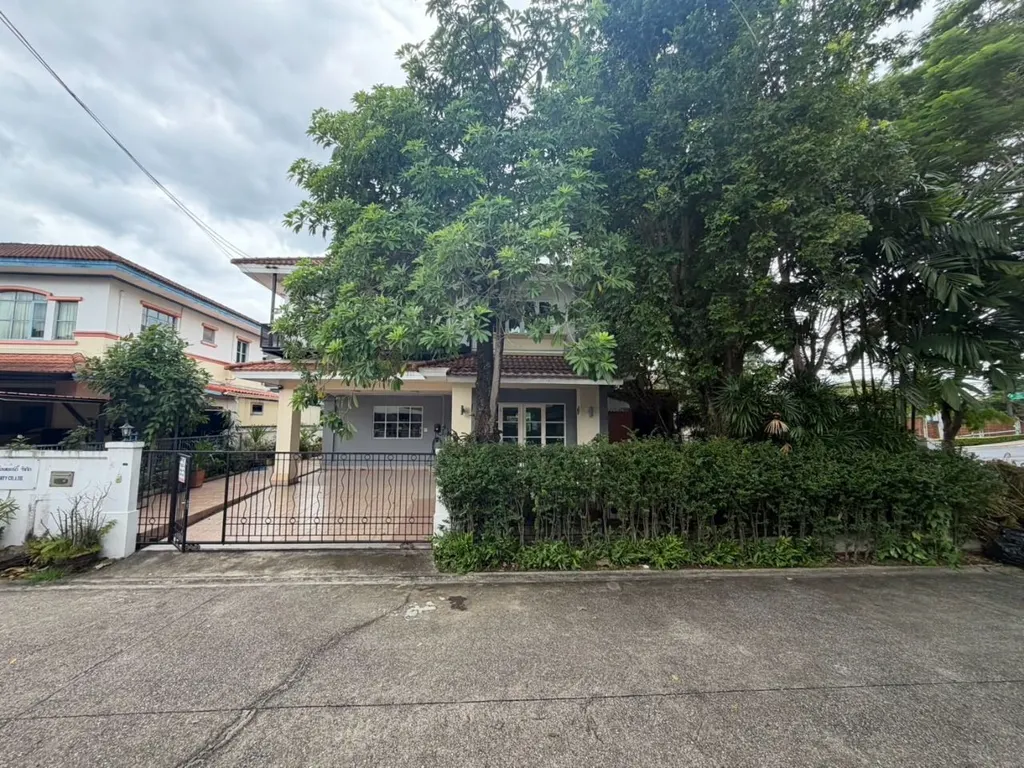
A chanote is the document the state issues to show ownership: the person named on it owns that plot and may sell it, give it away, mortgage it or subdivide it, all with the backing of the law. The Nor Sor 3 family of papers (Nor Sor 3, Nor Sor 3 Kor and Nor Sor 3 Khor) is a certificate of use instead. It confirms that the land is genuinely being used, which is not the same as owning it, so plots without a chanote are usually valued lower and take longer to finance.
A Sor Kor 1 is weaker still. It is only a notification of occupation, filed before the year 2497 in the Thai Buddhist calendar. That land changes hands by handing over possession rather than by registration, which carries real risk, although the holder can apply to have a chanote issued.
Thailand has had deed legislation since the Ror Sor 127 land title act. It was amended many times before being folded into the Land Code that still governs titles today.
Which land can get a chanote
The Land Department sets the conditions. The applicant must already occupy and make use of the plot, and the plot must not be land the public shares, such as a watercourse, a highway, a riverbank strip or communal grazing ground. It must sit outside national forest reserves, national parks, wildlife sanctuaries and no-hunting areas, it must not be a hill or a mountain, and its average slope must stay below 35 percent, the threshold set in the national forest policy.
Island plots, and plots whose occupation was never declared, need older evidence: a Sor Kor 1 notification of occupation, a reservation certificate, a Nor Kor 3 or a Kor Sor Nor 5. The occupier must also have held the right before 1 December 2497 in the Thai Buddhist calendar, the day the Land Code came into force. All of these criteria are set out in clause 14 of Ministerial Regulation No. 43 of the Buddhist year 2537.
Applying for a deed: the steps and the fees
File the application at the land office that covers the plot, with your ID card, house registration, marriage certificate and any name-change paper, plus whatever land evidence you already hold. Officials then set a survey date, examine the right, and post a public notice for 30 days. If nobody objects by the deadline, the deed is signed and handed over. Plots whose occupation was never declared, and plots larger than 50 rai, need the provincial governor's approval first.
The Land Department fee schedule breaks down like this:
- Application: 5 baht per plot
- Public notice: 10 baht per plot, plus 10 baht per plot for whoever posts it
- Survey fee: 40 baht per plot
- Investigation fee where a certificate of use already exists: 30 baht per plot
- Boundary markers: 15 baht or 50 baht each, depending on the type
- Allowance for the local official or representative attending the survey: 50 baht per person per day
- Up to 20 rai: 20 baht per plot; each rai above that adds 2 baht, and part of a rai counts as a whole rai
In practice the total runs from a few hundred to a few thousand baht per plot, depending on the size of the land and on how many markers have to go in.
Lost or damaged deed: getting a replacement
If the owner's copy is lost, report it at the land office that holds the plot and bring at least two credible witnesses for the officials to question. The office posts a notice, and once 30 days pass with no objection it draws the forms and issues a replacement deed.
The replacement costs 50 baht per copy. If you send someone else in your place, add 20 baht for the power of attorney and 30 baht of stamp duty on it.
What transfer day costs at the land office
The standard registration fee is 2 percent of the appraised value, with a floor of 20 baht. A registration with no stated value costs 50 baht per plot. Inheritance transfers, and gifts between parents and children or between spouses, sit on their own separate rate.
On the tax side, stamp duty is 1 baht for every 200 baht of price, or part of 200 baht. A seller who falls under specific business tax pays 3.3 percent of the appraised value instead. Where the seller is a company, the buyer withholds 1 percent of the sale price as income tax and remits it.
A discount is in force right now. Two Ministry of Interior announcements dated 30 June 2026 cut both the transfer fee and the mortgage registration fee to 0.01 percent for detached houses, semi-detached houses, townhouses, shophouses, the land under them, and condominium units. The sale price and the appraised value must each stay at or below 7 million baht, and the mortgage must stay within 7 million baht too. Only Thai nationals buying as individuals qualify, and the measure runs from 1 July 2026 to 30 June 2027. Our full walkthrough of transfer-day costs is in buying a resale condo step by step.
Buying a condo: a unit title, not a land deed
A condo unit has no land deed of its own. The whole site stays under a single chanote held by the project. When the building is registered as a condominium, the Land Department issues a unit ownership certificate, the Or Chor 2, for each unit, along with a schedule showing every unit's share of the common property. On the project side, registering the condominium costs 2,000 baht, each unit certificate costs 200 baht, and registering the juristic person costs another 2,000 baht.
So when you buy a resale condo, the paper to ask for is the unit ownership certificate, not a land deed. Foreign buyers have extra conditions, set out in can foreigners buy a condo in Thailand.
What to check before you pay a deposit
- Ask for the original deed, not a photocopy, and match the deed number, parcel number, survey page, subdistrict, district and area against the listing
- Turn it over and read the registration record on the back for mortgages, servitudes or any standing freeze order
- Compare the owner's name with the seller's ID card; for inherited or co-owned land, ask for the probate papers and every co-owner's consent
- Check it against the master copy at the local land office, because that is the copy relied on in a dispute
- If you are buying with a loan, allow time for the bank valuation and book the transfer date with the bank in advance
On DooAsset the median asking price for a Bangkok condo is 8,500,000 baht across 344 listings, and the median rent is 29,900 baht a month across 585 listings. Browse the real thing in houses for sale and condos for sale.
Last updated · written by the DooAsset team · figures may change as listings open and close each day
Sources
- กรมที่ดิน — ที่ดินที่ออกโฉนดที่ดินได้
- กรมที่ดิน — การขอออกโฉนดที่ดินเฉพาะราย
- กรมที่ดิน — การขอใบแทนหนังสือแสดงสิทธิในที่ดิน
- กรมที่ดิน — ค่าธรรมเนียม ภาษี และอากร ในการจดทะเบียนสิทธิและนิติกรรม
- กรมที่ดิน (สำนักงานที่ดินจังหวัดพิจิตร) — มาตรการลดค่าธรรมเนียมจดทะเบียนสิทธิและนิติกรรมสำหรับที่อยู่อาศัย
- กรมที่ดิน — การจดทะเบียนอาคารชุดและหนังสือกรรมสิทธิ์ห้องชุด
- กรมที่ดิน — ประวัติโฉนดที่ดินของไทย
- กรมที่ดิน (สำนักงานที่ดินจังหวัดตราด) — ส.ค. 1 คืออะไร ใช่โฉนดที่ดินหรือเปล่า
Facts checked against the sources above by the DooAsset data team on · every figure in this article comes from them or from listings on DooAsset