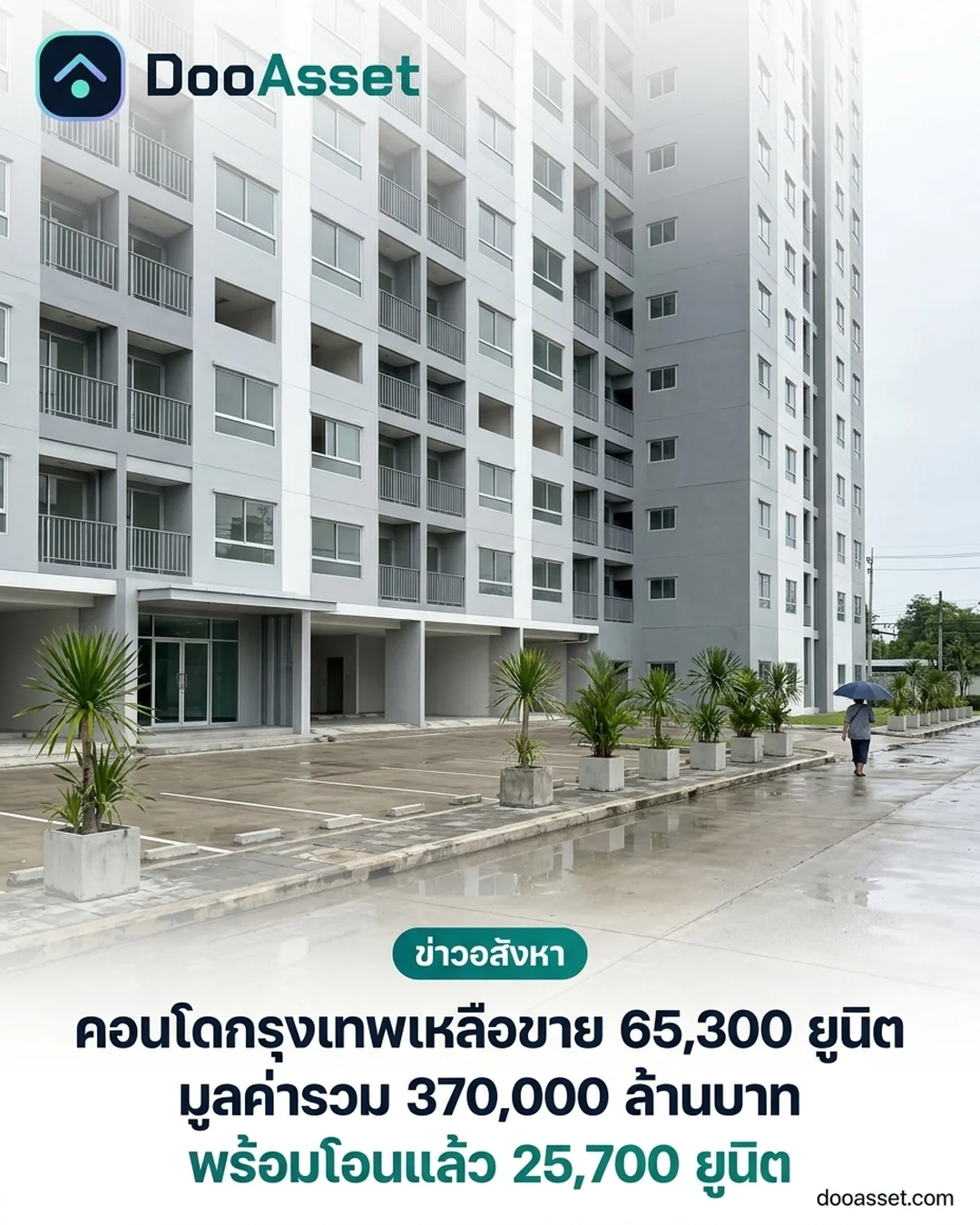
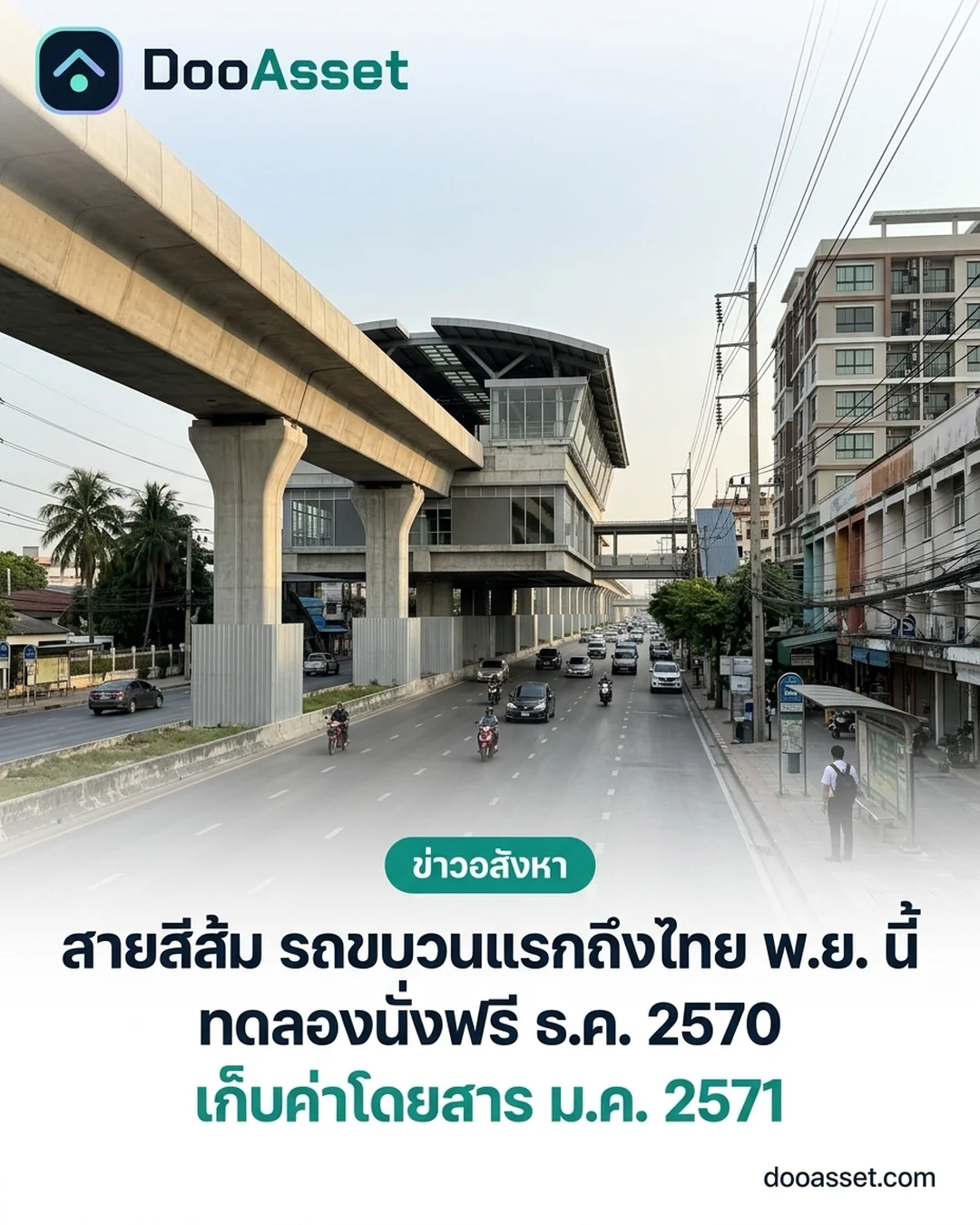
Bangkok rail fares capped at 17-45 baht from Jan 2027, sign-up in Dec 2026
Short answer
The joint ticket committee met on 7 October 2026 and confirmed the common fare: entry capped at 17 baht and a trip capped at 45 baht across the whole Bangkok rail network, with no repeat entry fee when changing lines, from 1 January 2027. Thai nationals who register an EMV card get the difference back within three working days.
Summary of this article by the DooAsset team · Updated
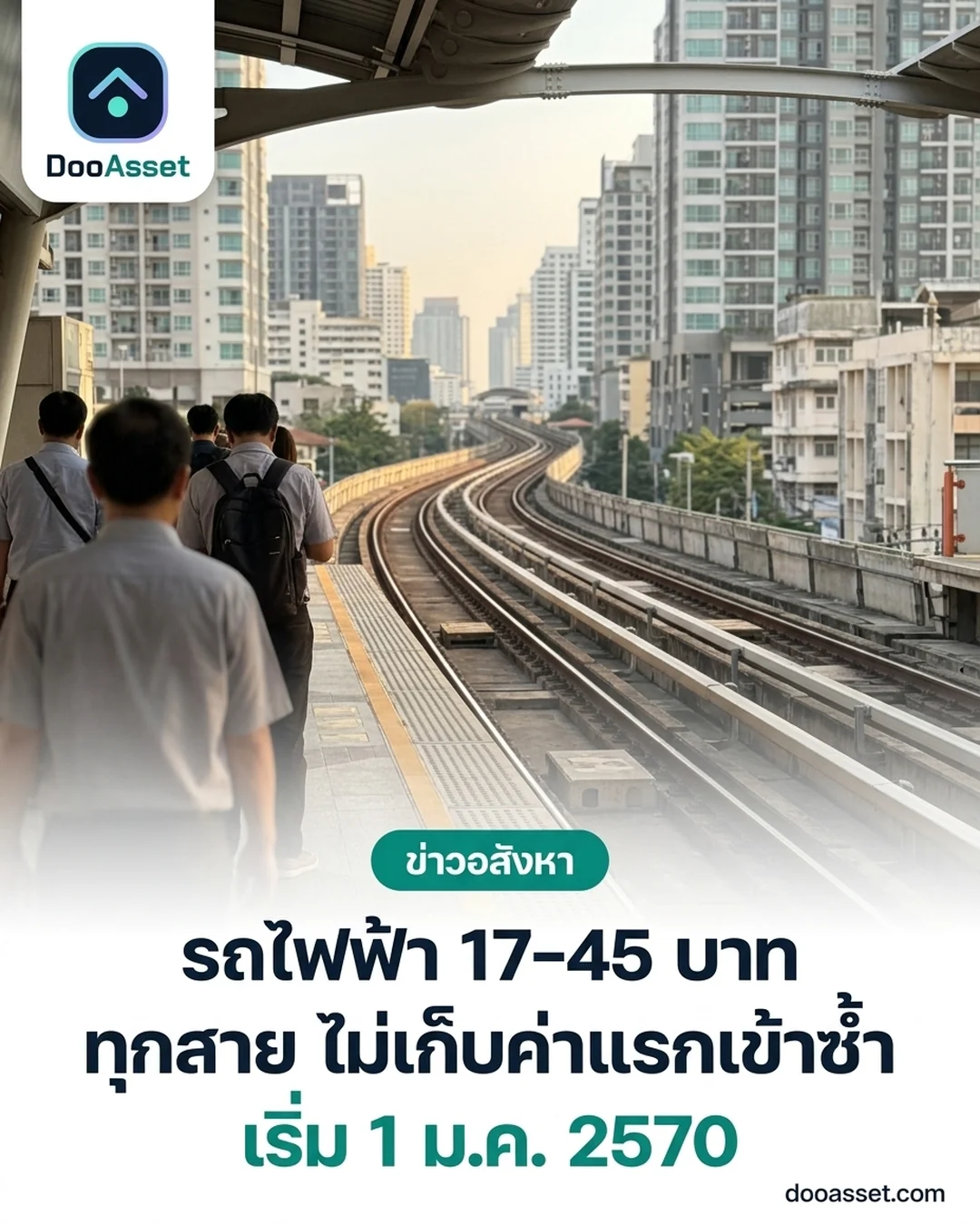
Fare cap of 17-45 baht confirmed, starting 1 January 2027
Thailand's joint ticket policy committee met for the fourth time this year on 7 October 2026, with Deputy Prime Minister and Transport Minister Phiphat Ratchakitprakarn in the chair. The committee reviewed how ready the system is for the common rail fare: an entry fee of no more than 17 baht, and no more than 45 baht for a whole trip, on every line in Bangkok and the surrounding provinces. The measure follows the cabinet resolution of 23 June 2026.
The committee also approved a revised five-year plan for the joint ticket system covering 2026 to 2030, in its October 2026 edition, and created four subcommittees to handle technology standards, the fare-sharing formula, oversight of the system, and its expansion to other provinces. On the back office, it agreed that Krungthai Bank will operate the Central Clearing House for Bangkok and its outskirts, once the bank completes the licence application the law requires. All of it sits under the Joint Ticket System Management Act of 2025.
Pay the full fare, get the difference back within three working days
The Department of Rail Transport set out the mechanics on 17 September 2026. Passengers still tap in and pay the real distance-based fare; when that fare rises above the 45 baht ceiling, the state returns the difference to the payment app or to the card account used for the journey, within three working days. EMV Contactless is the main medium, and it covers credit cards, debit cards and the Mangmoom card.
Thansettakij reported on 14 August 2026 that the benefit is reserved for Thai nationals who register an EMV card, because the system has to know who travelled before it can send money back. The plan at that point was to test the back office in December 2026 and launch on 1 January 2027, with compensation talks with the private concession holders due to finish within November 2026. Rather than buy the concessions back, the government chose to pay operators for the part of the fare above the ceiling, a bill it then put at around 4,000 million baht a year.
Registration in December, and what the Rabbit card will not do
Bangkokbiznews reported on 9 October 2026 that Deputy Transport Minister Siripong Angkasakulkiat expects registration to open through a state payment app in December 2026: travellers would link an EMV credit or debit card, or the Rabbit card they already carry, together with their ID card. The ministry also plans to ask the cabinet in early November 2026 for 5,800 million baht from the central fund. That sum is a request, not an approved budget, and no official registration date has been announced.
The same report describes the Rabbit option as a one-year bridge, meant to give the roughly seven hundred thousand people who tap one every day time to switch, and says it will work only on the Green, Gold, Yellow and Pink lines. Carrying on into the Blue or Purple line will need an EMV tap, because the Green Line can only take EMV readers at a handful of swing gates while its operating rights wait to be transferred to the MRTA. Anyone who crosses lines daily is better off getting an EMV card now.
What a 45 baht ceiling changes about where you live
The biggest winners are people who change lines every day, since until now each change meant paying a fresh entry fee. With the duplicate fee gone and a whole trip capped at 45 baht, the daily cost for someone at the far end of the Pink, Yellow, Purple or Red line becomes easy to predict, and much closer to what a neighbour of a central interchange pays.
That makes the trade-off between the rent you save and the travel you add easier to weigh, because the travel side now has a ceiling while rent still swings on location alone. One caveat: the policy covers rail fares only. The bus, the van or the motorcycle taxi from the station to your door are not in it, and the extra time on the way is a cost no fare table shows.
Median prices on DooAsset (data of 8 October 2026)
Across the condo rentals open on DooAsset in Bangkok, 586 listings put the median rent at 29,950 baht a month, with the middle half between 20,925 and 48,000 baht. The 344 condo sale listings have a median asking price of 8,500,000 baht.
By station: Asok has 87 listings open, a median rent of 31,000 baht across 42 of them and a median sale price of 14,250,000 baht. Sala Daeng has 52 open, a median rent of 55,000 baht across 33 listings and a median sale price of 16,000,000 baht. Further east the picture thins out: the Lam Sali interchange has 3 listings at a median rent of 15,000 baht, and Lat Phrao 2 listings at 29,000 baht.
Those outer-line counts are too small to be more than a rough picture. Even so, the distance between 55,000 baht at Sala Daeng and 15,000 baht at Lam Sali shows that rent moves far more than a fare that now has a ceiling.
A checklist before you move
- Count the line changes on your route, and check whether those lines are the ones where a Rabbit card can claim the benefit.
- Have ready the EMV credit or debit card you intend to register, because tapping with EMV everywhere is where the system is heading.
- Add the cost of getting from the station to your door, which the 45 baht ceiling does not cover.
- If you are thinking of moving, compare the new area and your current one using rents that are open now, not the prices you remember from last year.
- There is no need to decide before December 2026, while the registration rules and the compensation budget are still with the cabinet.
Read next
- How much more does a room next to a station cost - the rent gap by distance from a station, from real listings
- Condo for rent near the rail under 15,000 baht - where a tight budget still reaches
- Working near Asok, where to rent - weighing travel time against rent
Last updated · written by the DooAsset team · figures may change as listings open and close each day
Sources
- MGR Online — คนต.ปรับแผน"ตั๋วร่วม" 5 ปีรับรถไฟฟ้า 17-45 บาท ตั้งอนุฯ 4 ชุด พัฒนาระบบ-คำนวณแบ่งรายได้-ชดเชย ()
- แนวหน้า — “คนต.” ตั้งคณะอนุกรรมการ 4 ชุด ขยายผลการบริหารจัดการระบบตั๋วร่วมครอบคลุมทั้งประเทศ ()
- MGR Online (รายงานการประชุมกรมการขนส่งทางราง) — ขร.ย้ำรถไฟฟ้า 17-45 บาท เก็บตามจริงก่อน หากเกินรัฐคืนให้ผู้โดยสารผ่านแอป”เป๋าตัง / บัญชีบัตร”ภายใน 3 วัน ()
- ฐานเศรษฐกิจ — “คมนาคม” ปักธง ธ.ค.นี้ ทดสอบระบบ ลุยตั๋วร่วม รับค่าโดยสารรถไฟฟ้า 17-45 บาท ()
- กรุงเทพธุรกิจ — 'คมนาคม' เตรียมเปิดลงทะเบียน ธ.ค.นี้ รับสิทธิ 'รถไฟฟ้า' 17 - 45 บาทตลอดสาย ()
- ฐานเศรษฐกิจ — ‘พิพัฒน์’ ตั้ง 4 คณะอนุกรรมการ รื้อแผน 5 ปี ดันระบบตั๋วร่วม ()
Facts checked against the sources above by the DooAsset data team on · every figure in this article comes from them or from listings on DooAsset